
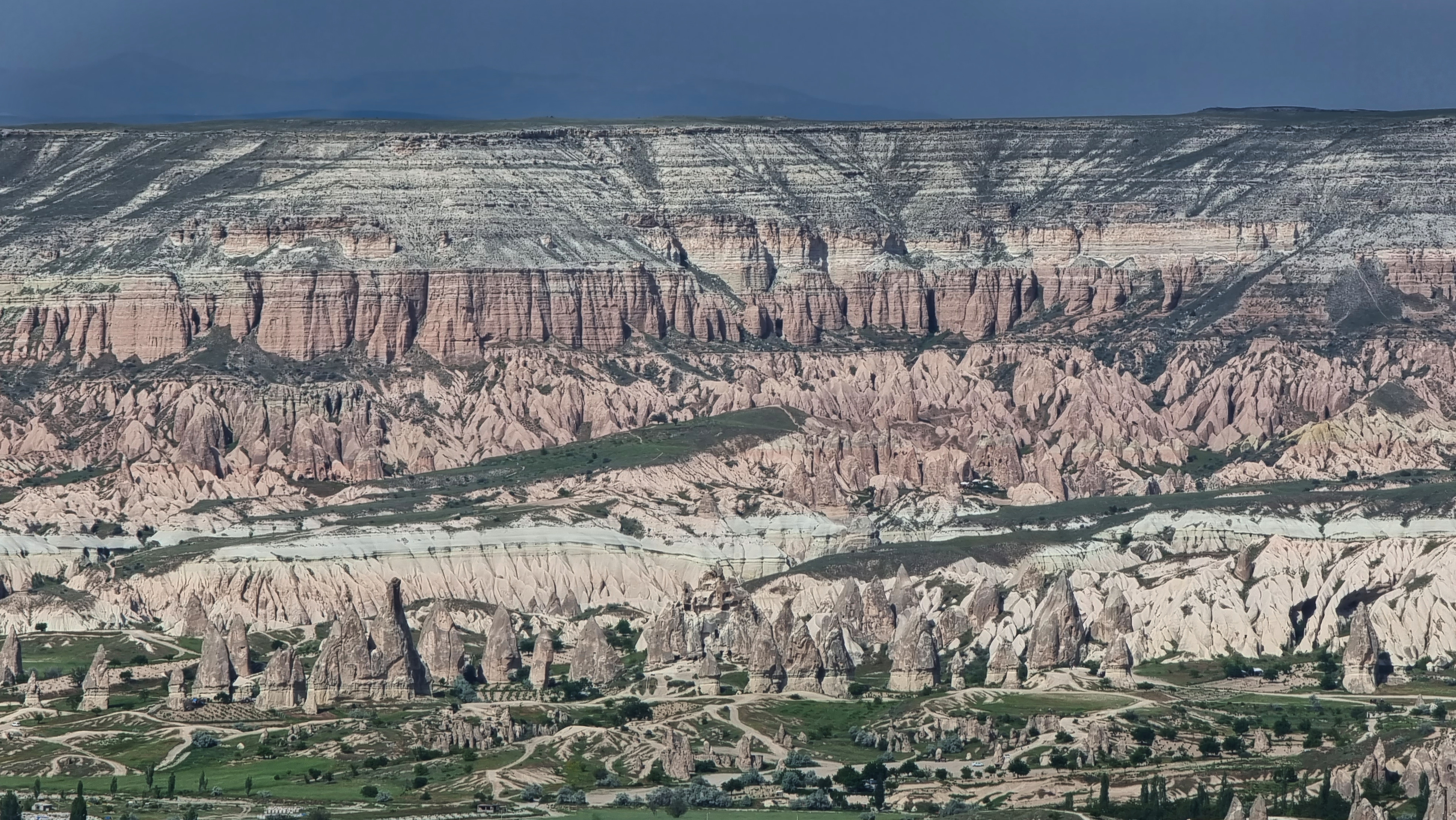
With rows and rows of stalagmite-like rocks reaching toward the sky, Cappadocia’s landscape is like no other place on Earth. It resembles scenes from a sci-fi novel that is alien yet utterly fascinating.
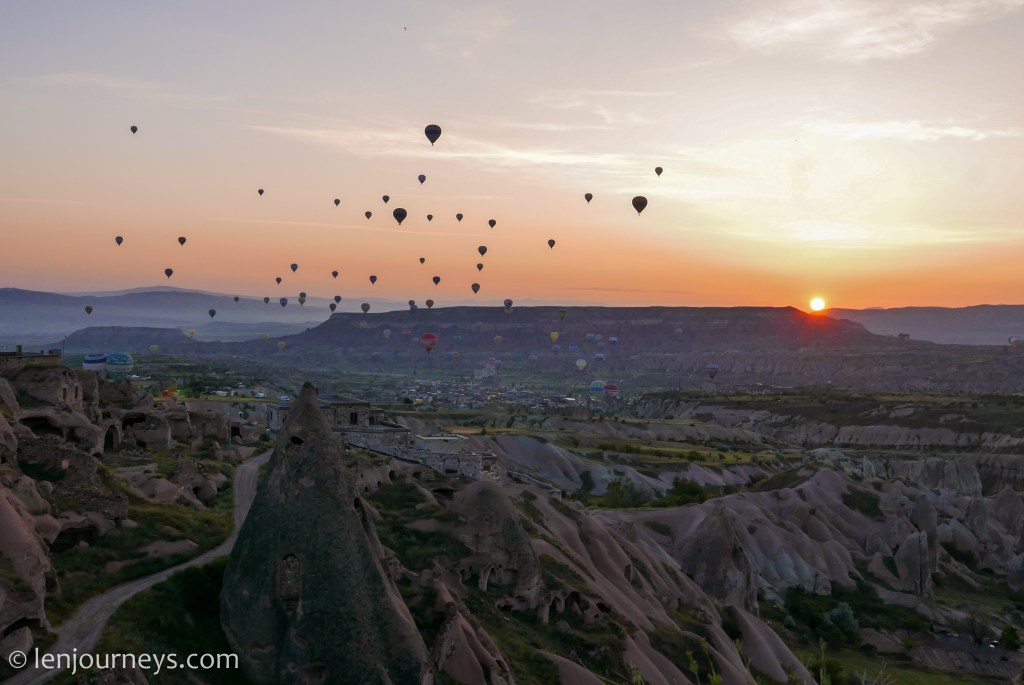
The sky of Cappadocia was still cloaked in darkness when I noticed dozens of hot-air balloons getting ready for their early morning ride. They shimmered like giant, vibrant orbs as their burners roared against a deep violet-blue background. One by one, the hot-air balloons lifted off the ground and drifted over a lunar-like landscape, slowly basking in the apricot light of the rising sun. Its first rays began to seep into the nooks and corners of the jagged ridges, revealing extraordinary shapes and patterns on the ochre rock surfaces.
Eons of volcanic activity and erosion have shaped this bizarre landscape.
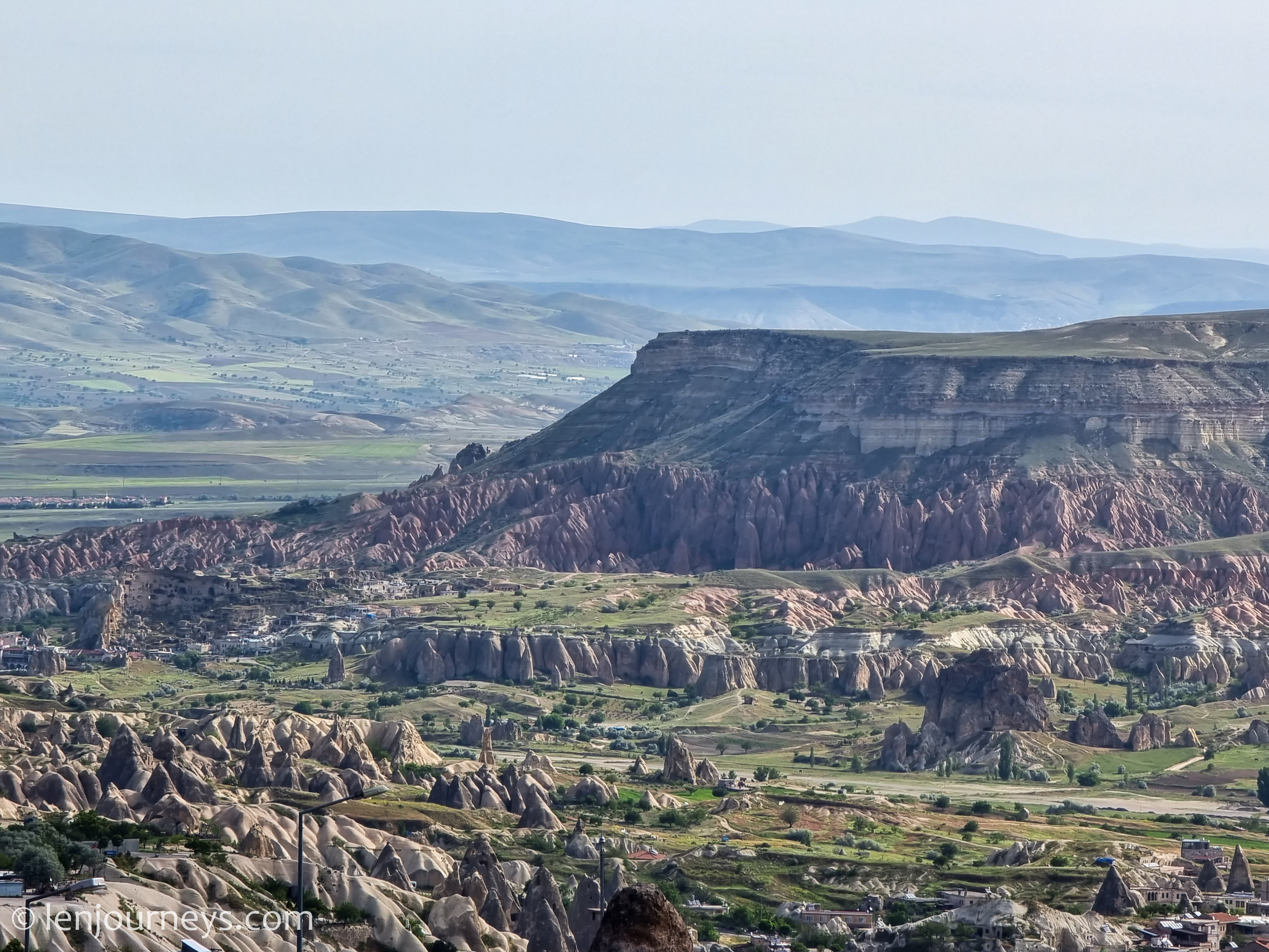
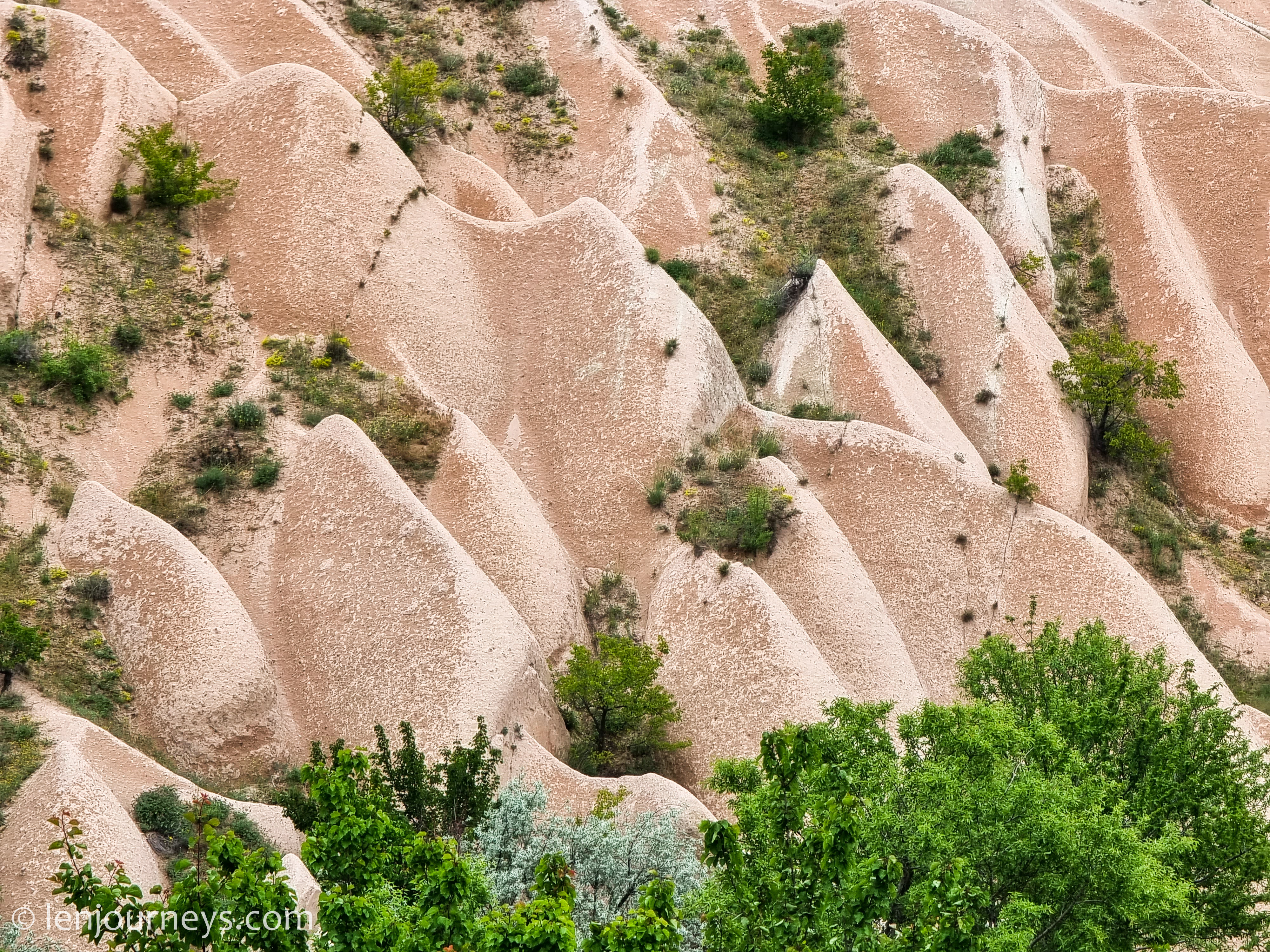
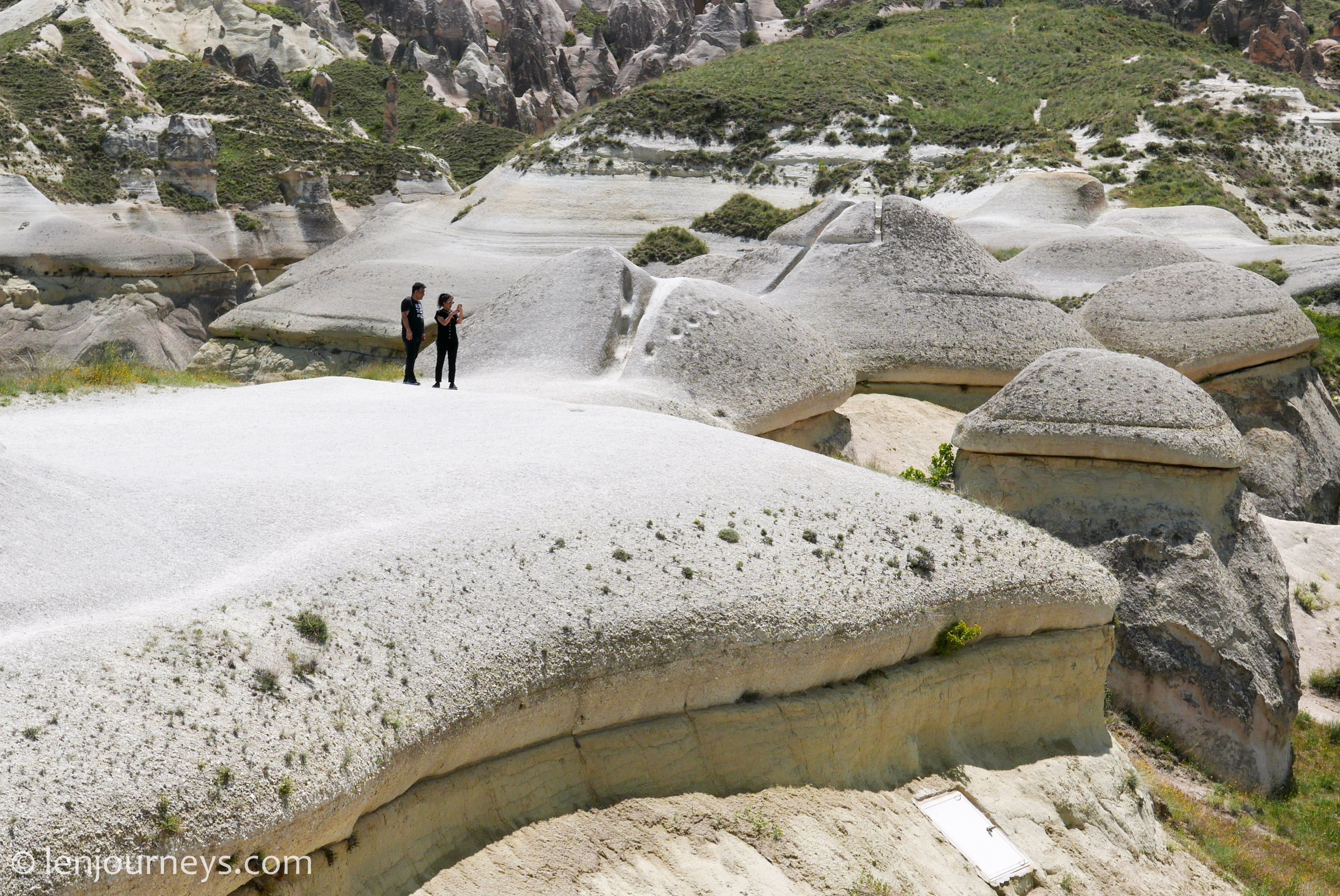
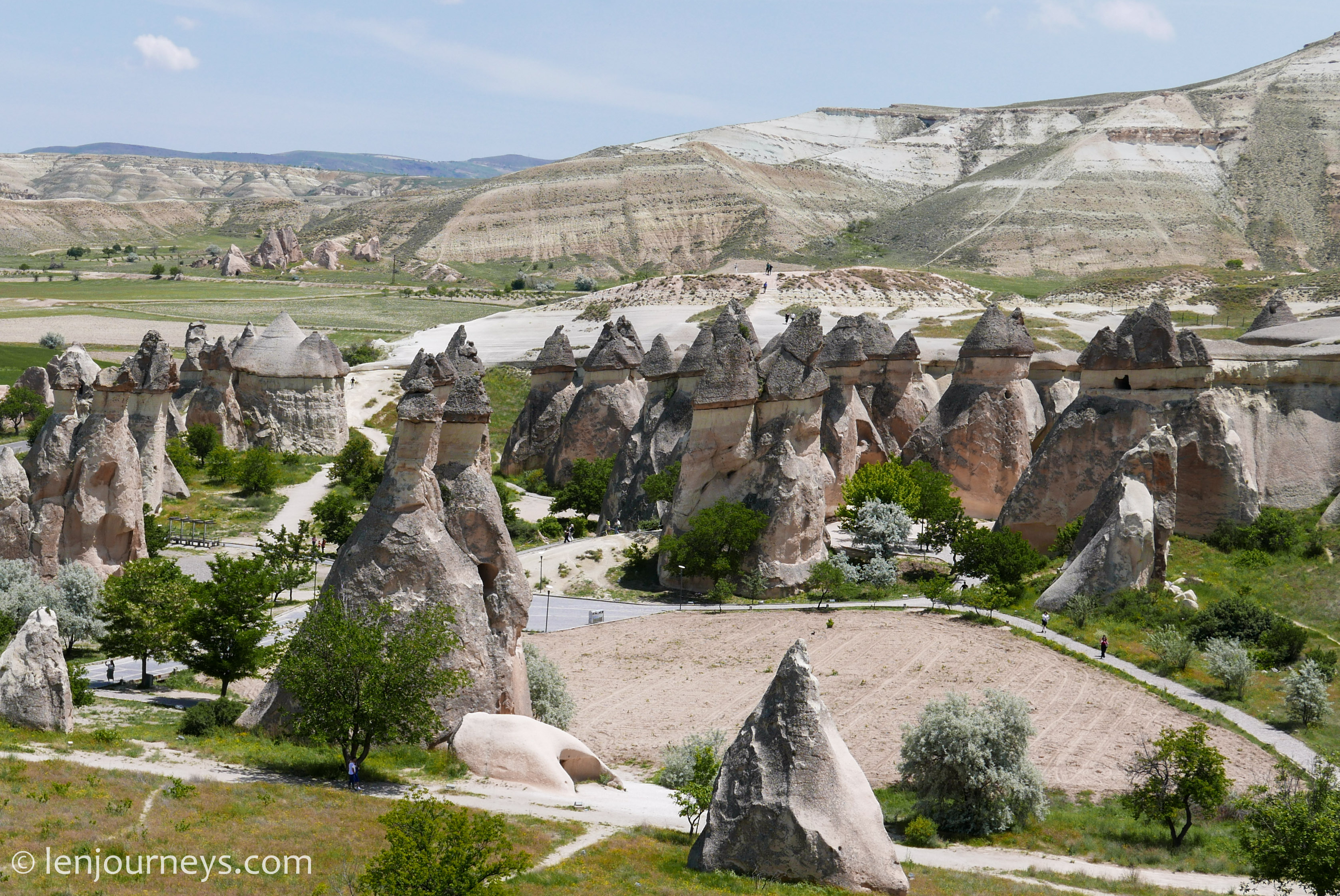
Eons of volcanic activity and erosion have shaped this otherworldly beauty. Initially, the explosive eruptions rained volcanic ashes and debris over the land. Then, hot lava flowed over this ash mixture, much like the newly baked crust on a cake, consolidating it into a relatively soft and porous rock called tuff. Over the ages, wind, rain, and snow eroded this tufa plateau, gradually sculpting them into deep ravines, valleys with jagged ridges, and forests of craggy cones and “fairy chimneys”.
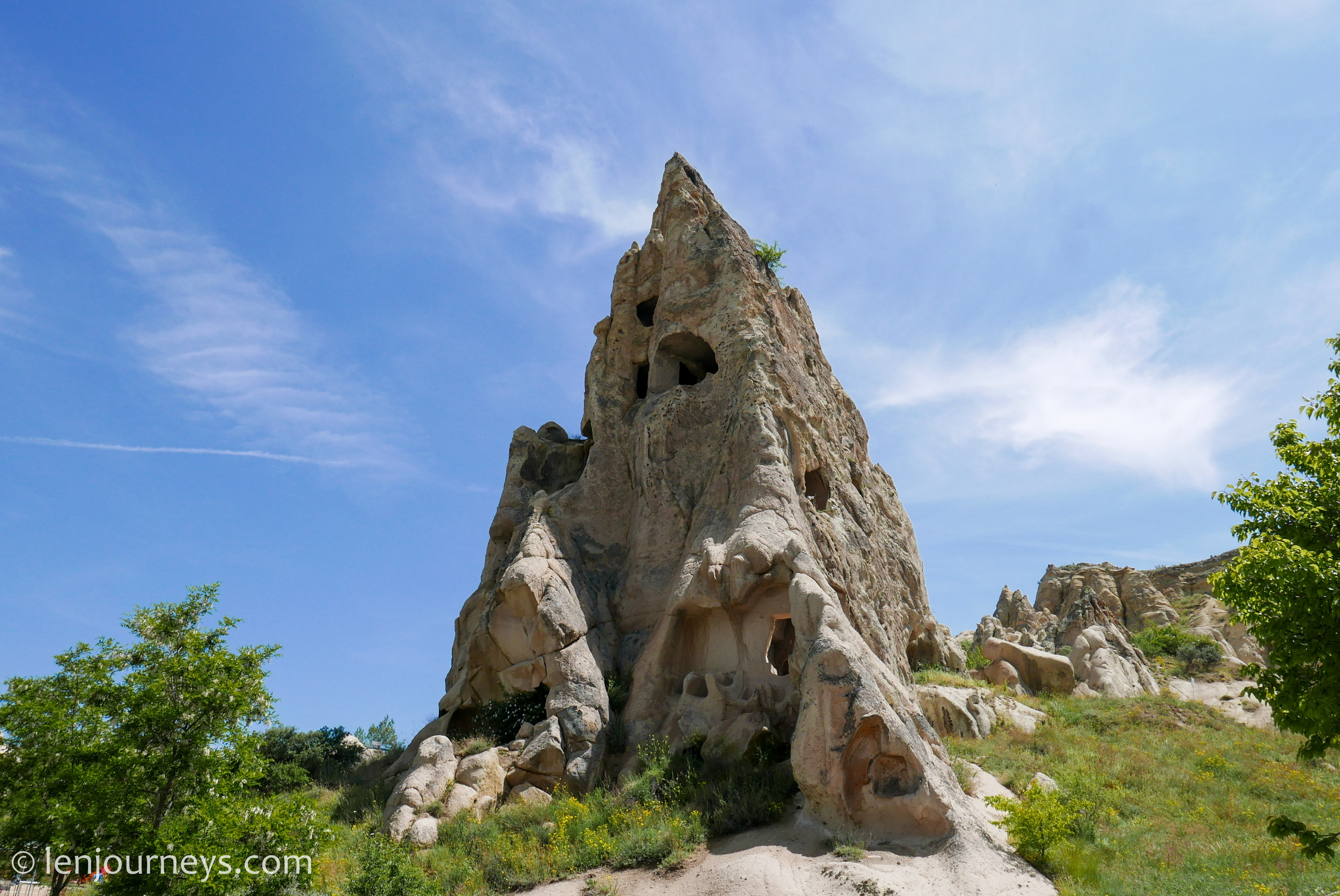
Despite their enchanting name, the fairy chimneys are not creations of any mythical beings; instead, they are remarkable geological works that have baffled almost every visitor to Cappadocia. Imagine this: weathering has beaten away the trunk of these towering rock structures, while the conical peaks, made of erosion-resistant basalt rock, have remained intact. The result is a series of minaret-like structures that appear to rise from the surrounding vineyards and shrub patches. Depending on the composition of the stone, these rock spires exhibit various shades of color, ranging from chalk white and honey yellow to dusty rose and ash grey.





1. Rock-Hewn Structures
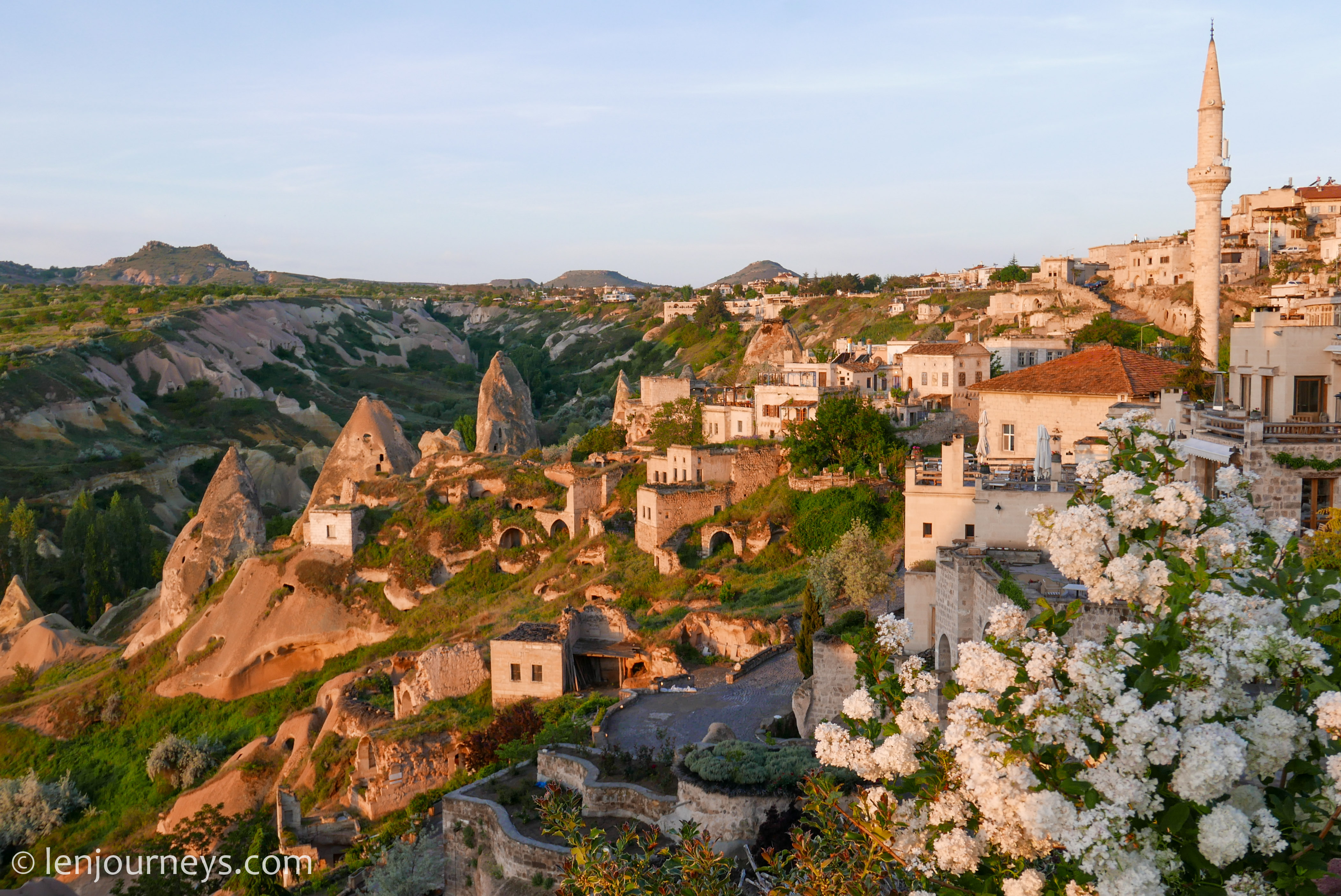
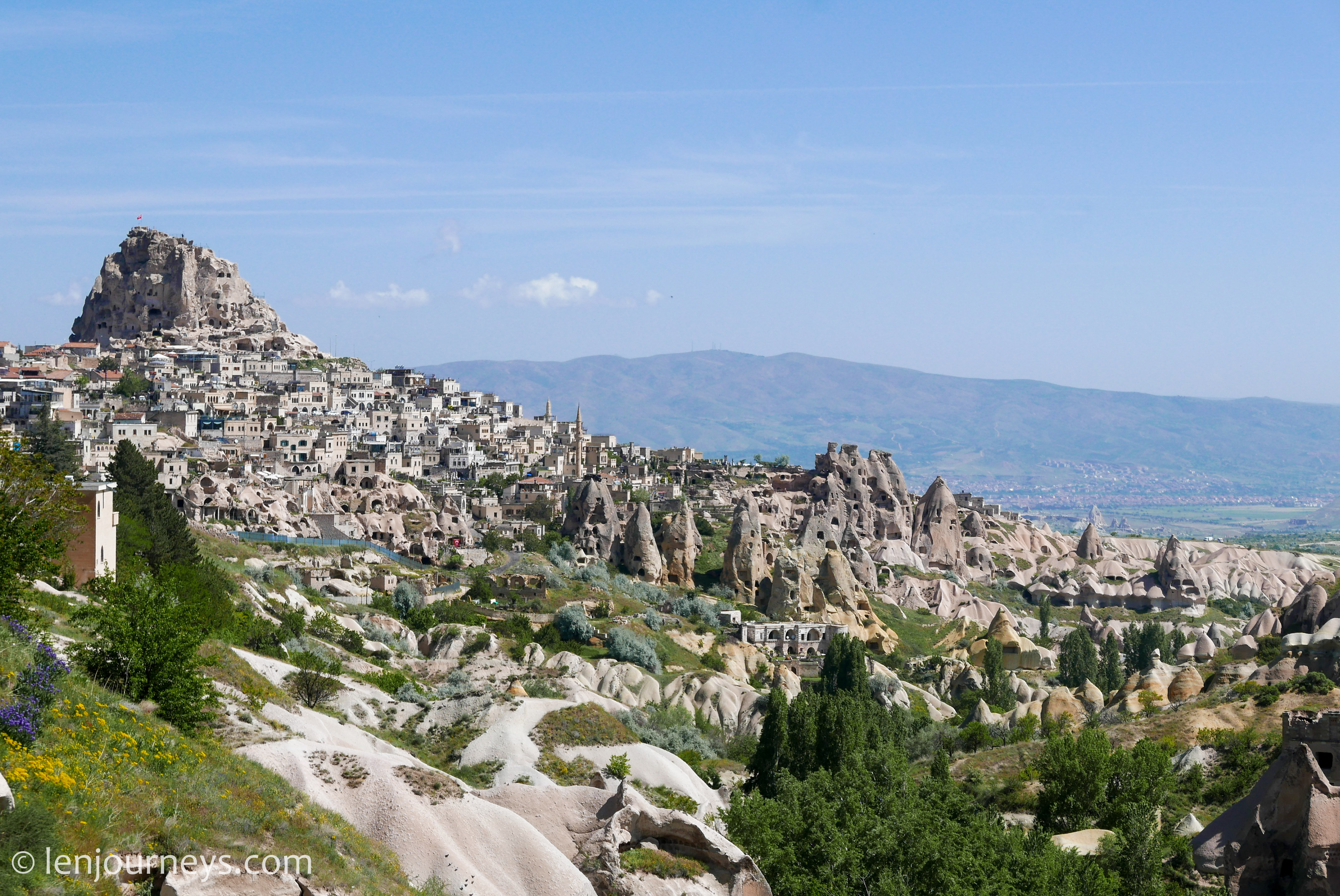
If nature was the first artist to shape Cappadocia’s topography, humans sculpted the rest, creating what is now considered a World Heritage Site. Although the landscape may appear barren from a distance, the malleable nature of the rocks and cones has long attracted inhabitants, from the Hittites in the 18th century B.C. to the Christian refugees of the first century. The latter went deep into the Cappadocia wilderness to avoid Roman persecution. Discovering that the tuff was easy to carve, they built shelters, churches, and monasteries in the cliffside chambers tucked deep in the folds of this surreal landscape.
Cappadocia remained a significant monastic center of Byzantine Anatolia until the invasion of the Seljuks in the late 11th century, with 600-odd churches and villages spreading across the plateau. Most have disappeared due to weathering, raids, and vandalism. Fortunately, some still stand and continue to illustrate a harmony between human interactions and these extraordinary landforms.
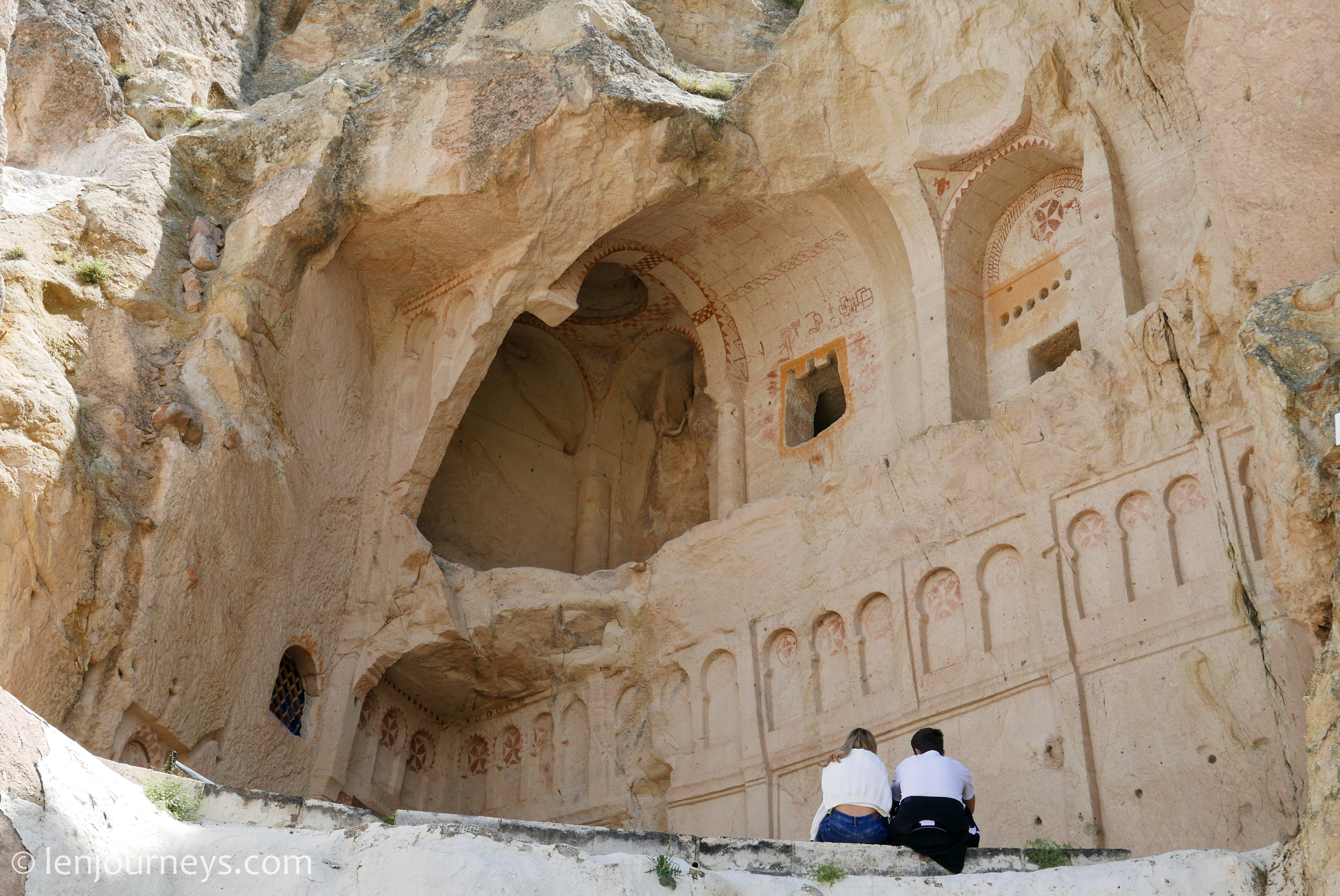
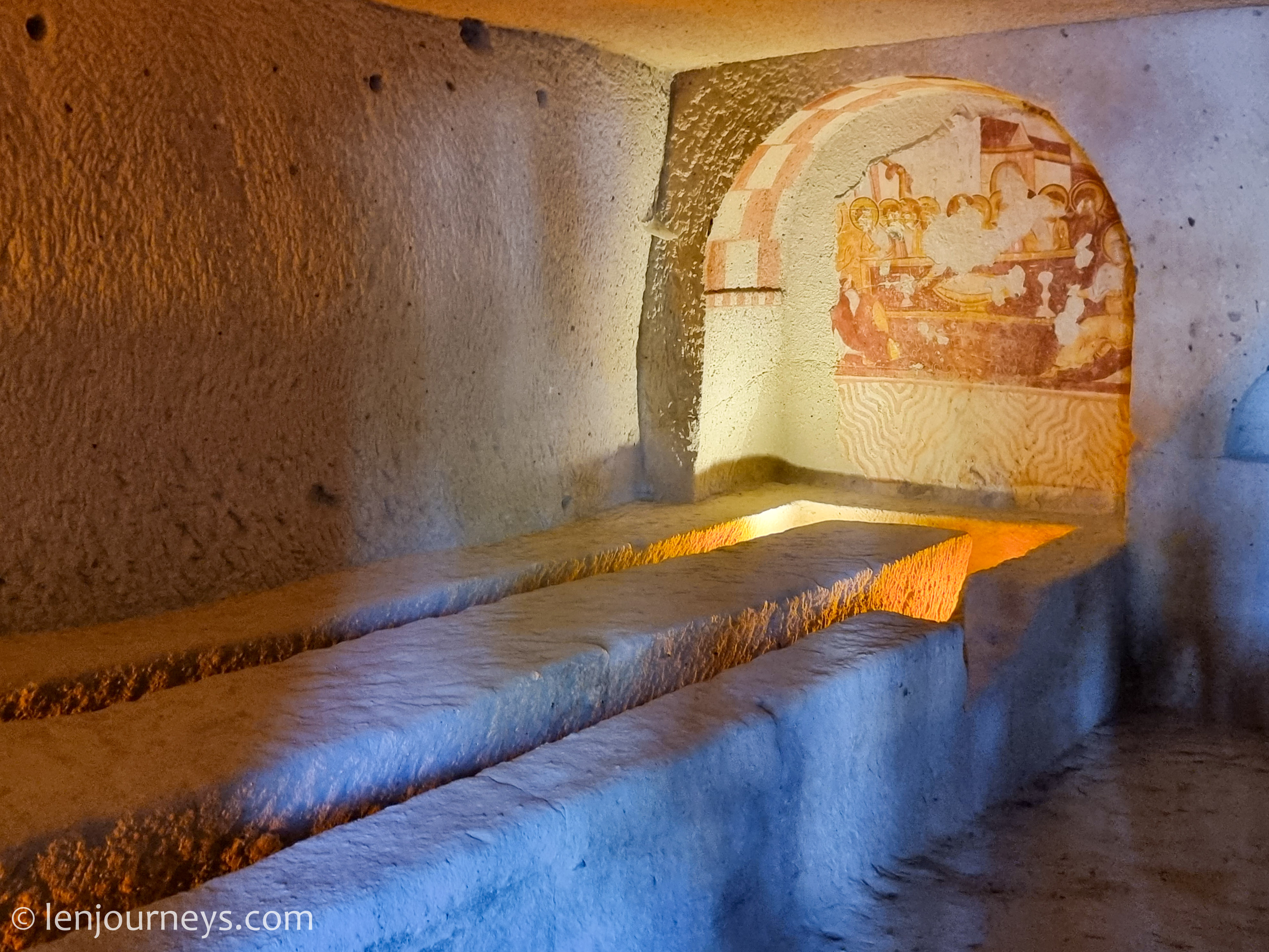
An outstanding example is Göreme, which consists of around 30 rock-hewn churches and chapels dating back to the 10th, 11th, and 12th centuries. Devotees constructed these marvelous sanctuaries, featuring vaulted ceilings, arches, and columns, and adorned them with icons and frescoes that depict scenes from the Bible and the life of Christ. Some, such as the Dark Church and the Buckle Church, could even preserve their original pristine tones and colors due to their limited exposure to daylight.
Another notable settlement is Paşabağı, also known as Monk Valley, where monks and hermits once sought solitude in pockmarked cliffs and volcanic cones. In contrast to the churches in Göreme, the rock-hewn structures in this valley demonstrate a spartan beauty, with decorations mostly limited to simple icons, such as Hellenistic crosses. They are compelling testaments to the Byzantine iconoclastic period – between the 8th and 9th centuries – when religious images were frowned upon.


2. Underground Cities
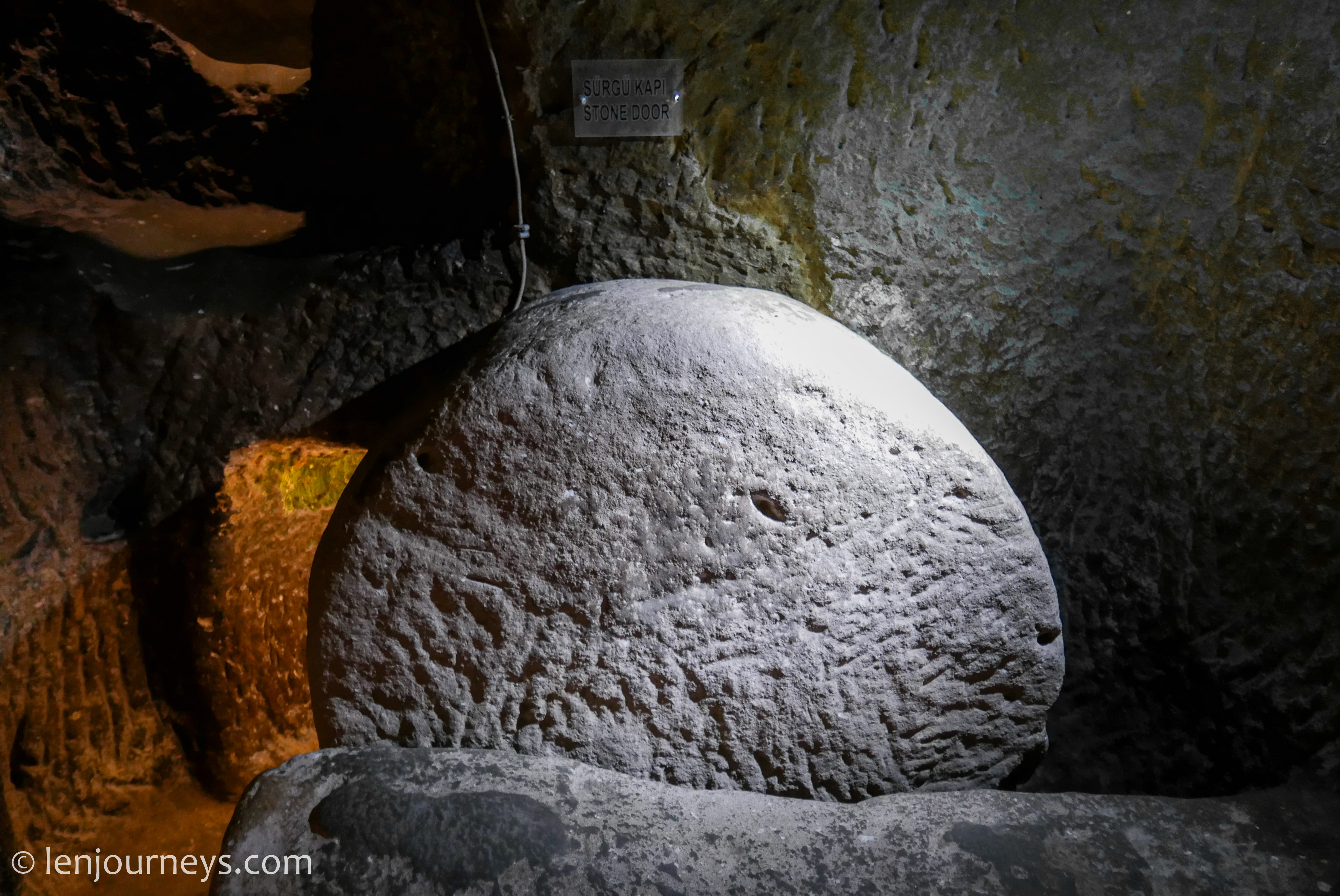
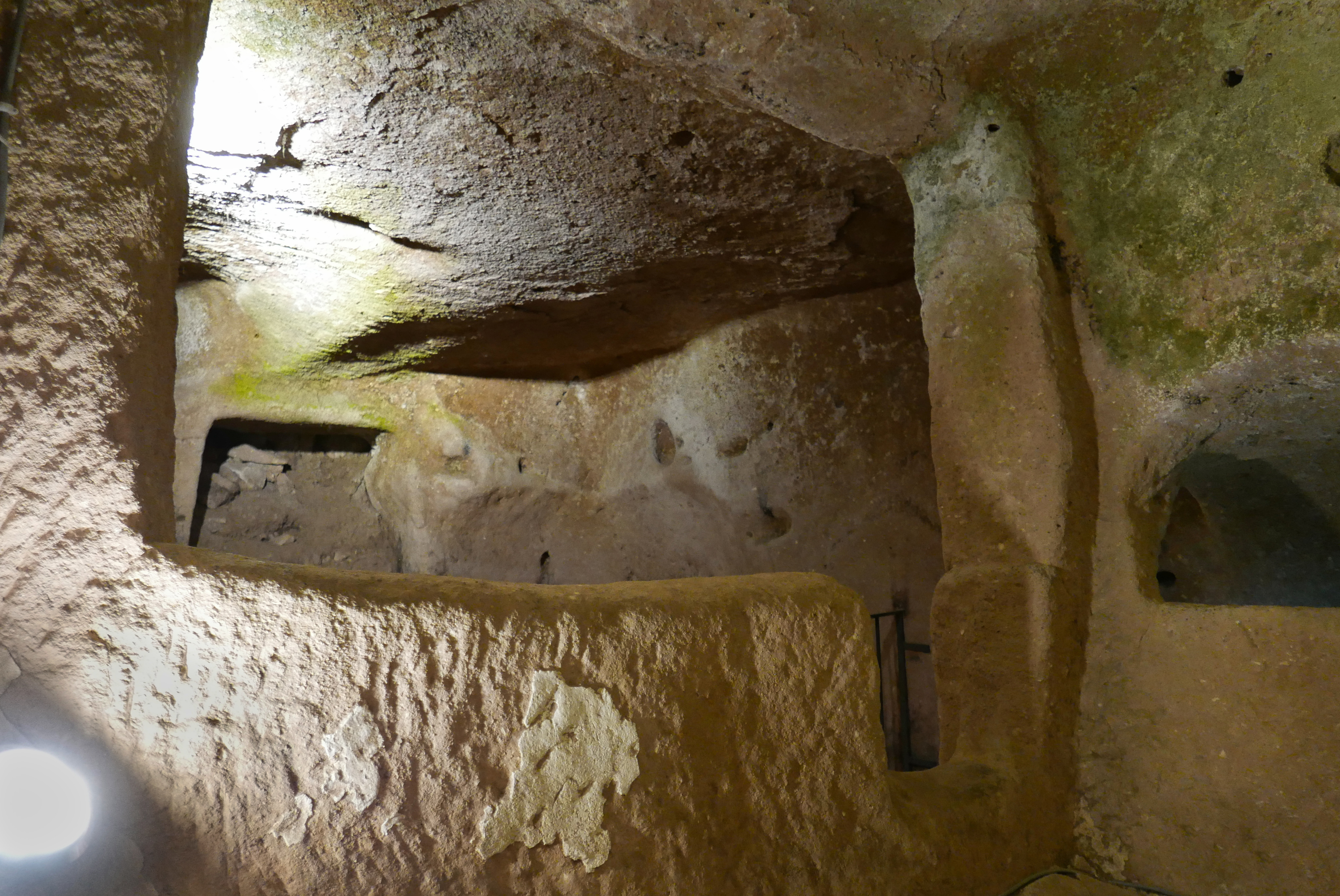
Cappadocia’s fairy chimneys and rock-hewn churches are undeniably impressive, but they’re just the tip of the iceberg. Due to its strategic location along the historic Silk Roads and its position on the frontier with the Muslim world, Cappadocians constantly faced invasions. In response to these threats, entire towns were hollowed in the soft volcanic ground, resulting in structures like ant colony’s interior. Locals would seek refuge in these subterranean labyrinths when enemies approached, sealing themselves off with heavy round stones and setting traps throughout multiple levels. Against such an ingenious defense strategy, invaders wouldn’t achieve anything from Cappadocia and often pass by, moving on to larger cities with more valuable resources.
“I hope you are not claustrophobic!” joked my guide as we squeezed through the tunnels of Özkonak, tens of meters beneath Cappadocia’s moonlike landscape. Discovered by a local farmer in 1972, this underground labyrinth is one of about thirty sites in the region. It features ten interconnected levels, reaching about 40 meters underground, but only four are open to the public. The Hittites were likely the first to construct this kind of underground shelter as far back as 2000 B.C. But it was the early Christians who made these sites into subterranean metropolises, complete with water sources, ventilation systems, kitchens, stables, storages, chapels, and communication instruments (exclusively in Özkonak). Some cities, like Derinkuyu, are so expansive they could accommodate 20.000 refugees for up to three months – a true architectural and engineering marvel.


3. Cappadocian Pottery
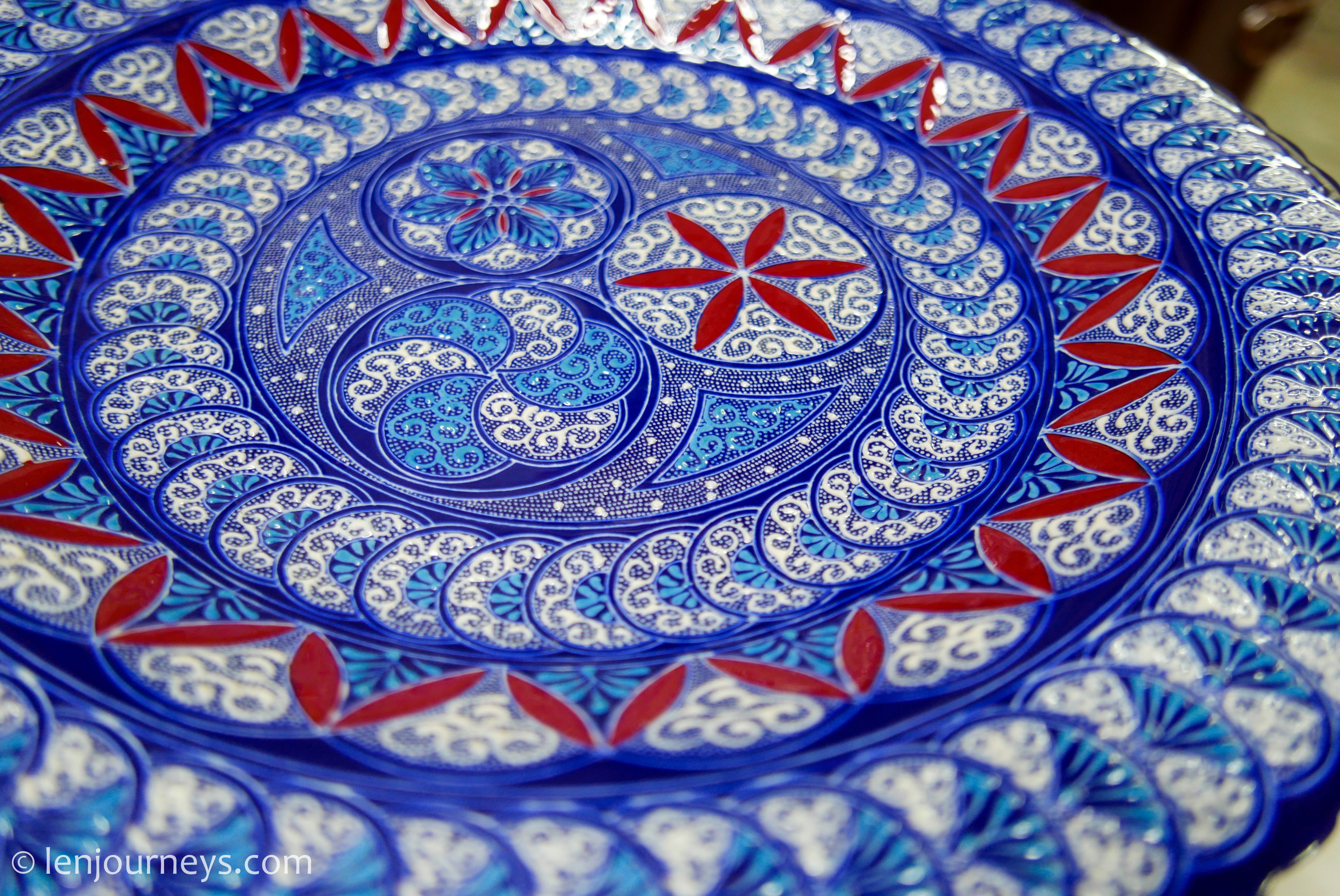
Besides being great builders, Cappadocians are also known for their exceptional pottery craftsmanship. Since the Hittite period, this region has produced jug vases, cups, plates, and bowls with distinctive designs, using the red silt from Türkiye’s longest river, the Kizilirmak or the Red River.
Towns along the river, such as Avanos (8 km north of Göreme), emerge as production centers, with dozens of eccentric ateliers showcasing their handicrafts. Traditionally, Cappadocian pottery is made from scratch on a foot-driven spinning wheel. The artisans then hand-paint their creations during the unglazing, with floral motifs, geometric patterns, and intricate arabesques being the most popular.
A millennial-old art
The craft has been passed down through generations, from fathers to sons. However, since the 1980s, this tradition has faced significant challenges as interest waned and there were fewer successors. This forced passionate potters to take the initiative to safeguard their art. They began to open workshops to the public and traveled throughout the country, sharing their knowledge and inspiring anyone interested in this millennia-old heritage.


Recommended Stay
Overlooking the spectacular fairy chimneys of Pigeon Valley, Argos in Cappadocia is a unique boutique hotel painstakingly constructed on remnants of an ancient monastery. It’s among the region’s most comprehensive restoration projects, taking almost 14 years to complete. The outcome is a cliffside hotel seamlessly blended into the village of Uchisar. In fact, it’s nearly impossible to discern where the hotel ends and the neighbors begin.
The essence of a traditional village is finely preserved.
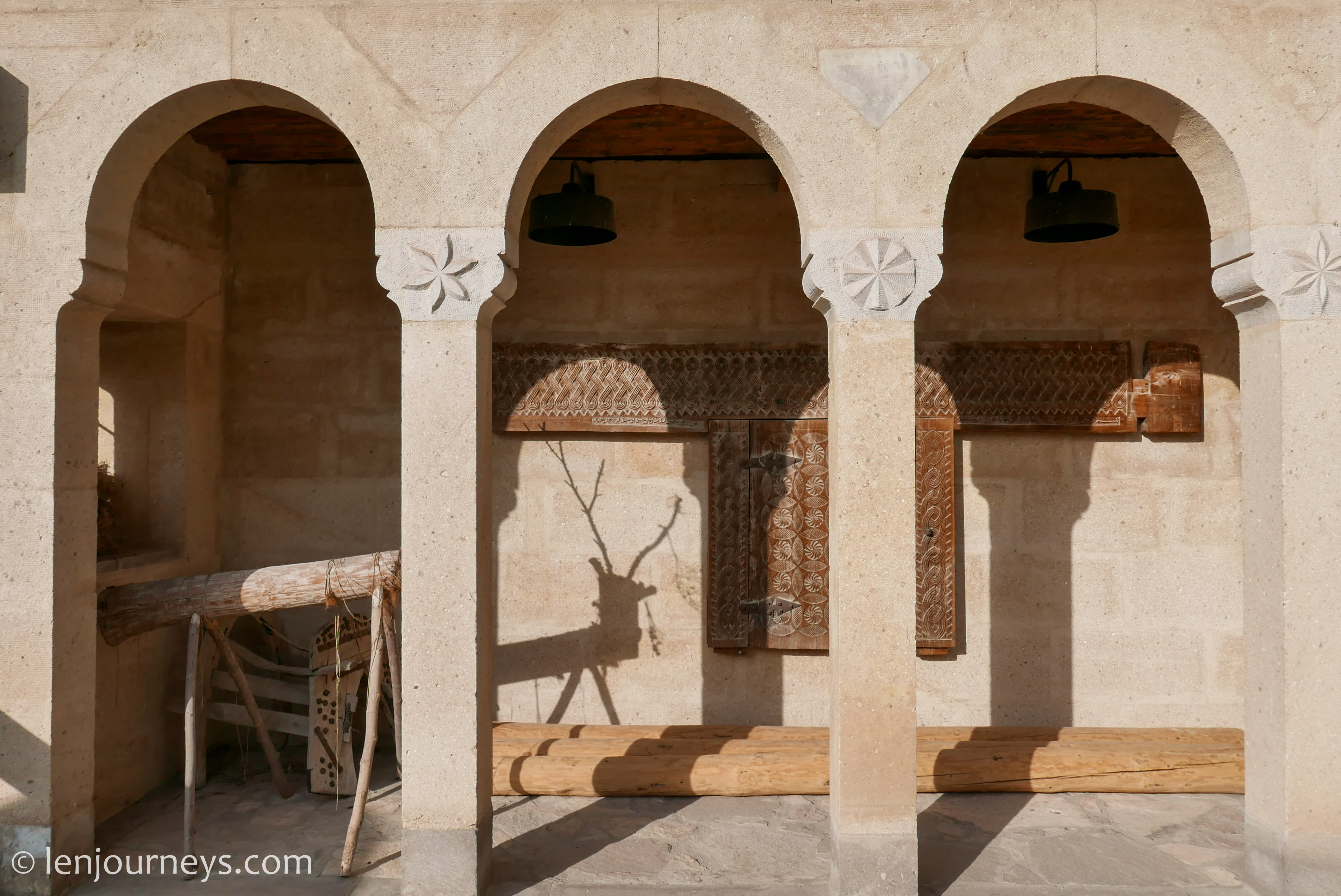
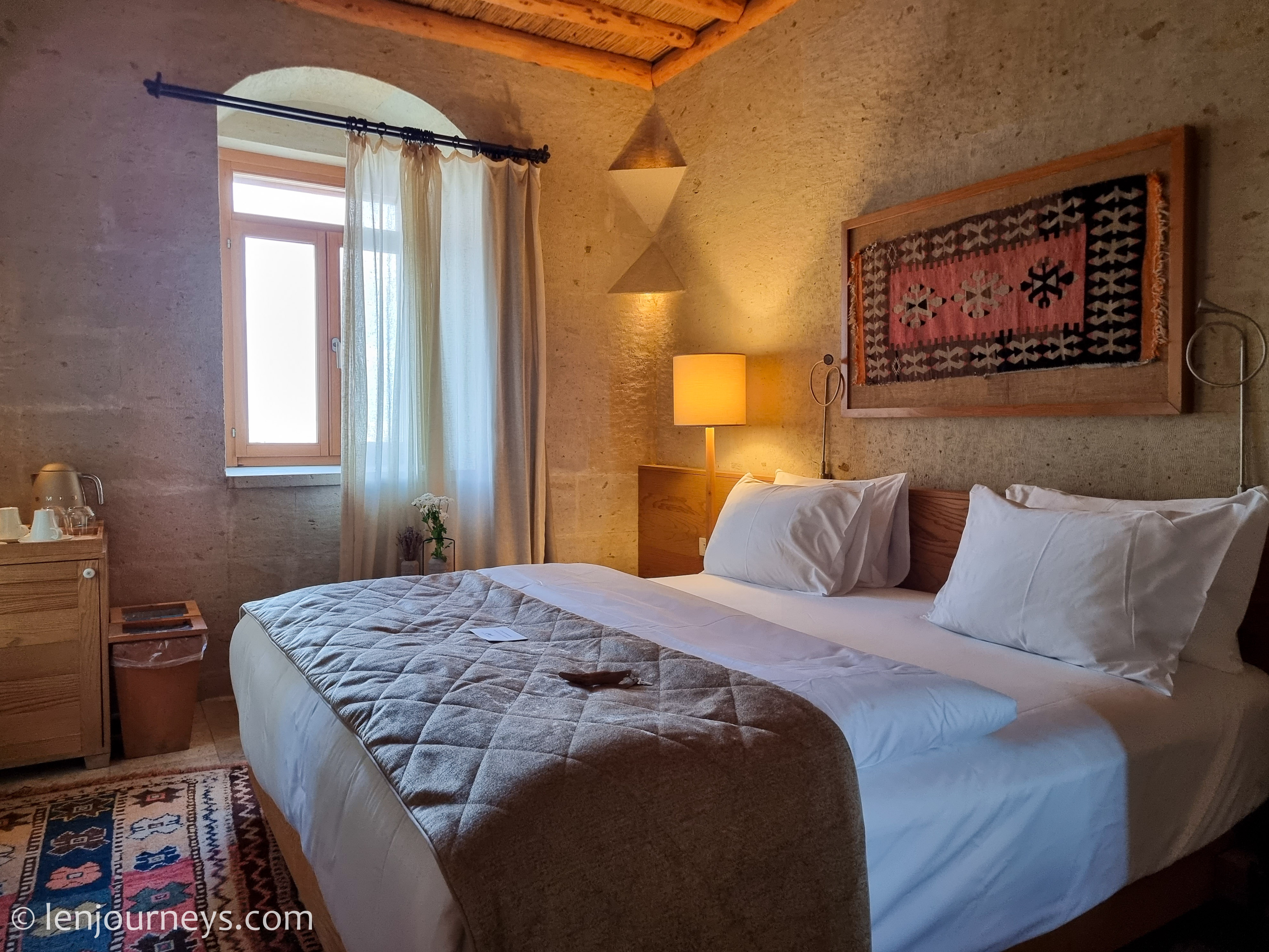
The essence of a traditional village is finely preserved in Argos, from the exposed honey-hued stone walls and arches, rock-cut rooms and suites, to the locally woven carpets and wooden handicrafts. However, everything is way more comfortable than when the original troglodytes lived on these hills. These include stylish furniture with alpine accents, reader-friendly lighting, modern heating, and good-sized bathrooms with sleek showers. A neutral, earthy color palette is applied throughout the hotel, creating a harmony between traditional and contemporary elegance.
Two delightful farmhouse-style restaurants enhance this atmospheric setting. The first is Seki – derived from the Turkish word for “terrace” – which offers alfresco dining with innovative Anatolian dishes using local products, including paired wines. Meanwhile, Nahita serves traditional Turkish cuisine and buffet breakfasts featuring an impressive selection of dips and freshly baked pastries. A heated outdoor plunge pool facing the valley and Mount Erciyes completes the hotel, providing a perfect place to unwind after a full day exploring Cappadocia’s surreal landscape.


DISCLAIMER:
My recommendation is written based on my personal experience. It was neither sponsored nor solicited by Argos in Cappadocia or any third party. All texts and pictures reflect my own opinions and are provided solely for informational purposes. I will not be liable for any errors or damages by using this information.


Cappadocia is such a beautiful area of Turkey. It’s full of interesting rock formations, hidden valleys, and fascinating history. Cappadocia is also rich in culture and nature, and not visiting during your travels to Turkey would be a missed opportunity. Thanks for sharing, and have a good day 🙂 Aiva xx
Thanks for visiting, Aiva 🙂 Cappadocia is indeed a fascinating place. The landscape is undoubtedly beautiful, but what I found more interesting is the culture and history of this place.
🥰🥰🥰
Cappadocia is an otherworldly magical place isn’t it. Your beautiful pictures took me right back. Maggie
Thanks for the kind words, Maggie 🙂 Magic is the correct word to describe this place. Aside from the landscape, all those houses, churches, and underground cities are nothing short of miracles.
I like how you include photos of what will eventually be chimneys in this blog post. It’s amazing to think of what nature can do. Of all stories I have read about Cappadocia, the underground cities are definitely one of the most extraordinary features of this area. It’s incredible that some people lived this way in the past, just like great colonies of ants. And as usual, you do know how to find beautiful hotels wherever you travel!
Thank you, Bama. I was surprised to see the origin of the chimneys. Some are as big as small hills, but wind and rain have carved them into countless slender pillars.
I must admit I have a soft spot for unusual lodges. Not necessarily heritage hotels, but they should have some connections to the places. But some lodges are really remote. I occasionally asked myself why I chose them in the first place 🙂
I’m yet to travel through Turkey and I’ve seen many fabulous photos, like yours of the balloons in Cappadocia. This area really does look otherworldly!
It surely is! 🙂 The balloons look great from the distance. But I won’t get on it haha. I had a terrible experience with a hot air balloon before. Besides, it depends too much on the weather. During my four days in Cappadocia, only one day is flyable. The rest were canceled due to strong wind.
What a shame. 🙁
Just got back from a trip to Cappadocia, and had a wonderful time. We stayed in a cave hotel in Goreme, did a hot air balloon trip, and some great hiking through Zemi, Love and Pigeon Valleys. Love your photos, thanks for sharing!
Indeed. Cappadocia is such a magical place. I’m glad that you like the post, Rob 🙂